
Bulk packaging supplies for 3PLs: specifying for the bench, not the brief
A 3PL feels every packaging decision twice, in labour and in floor space. Where the seconds go, how many sizes to hold, and why dim weight decides the range.
By Tradepack ·
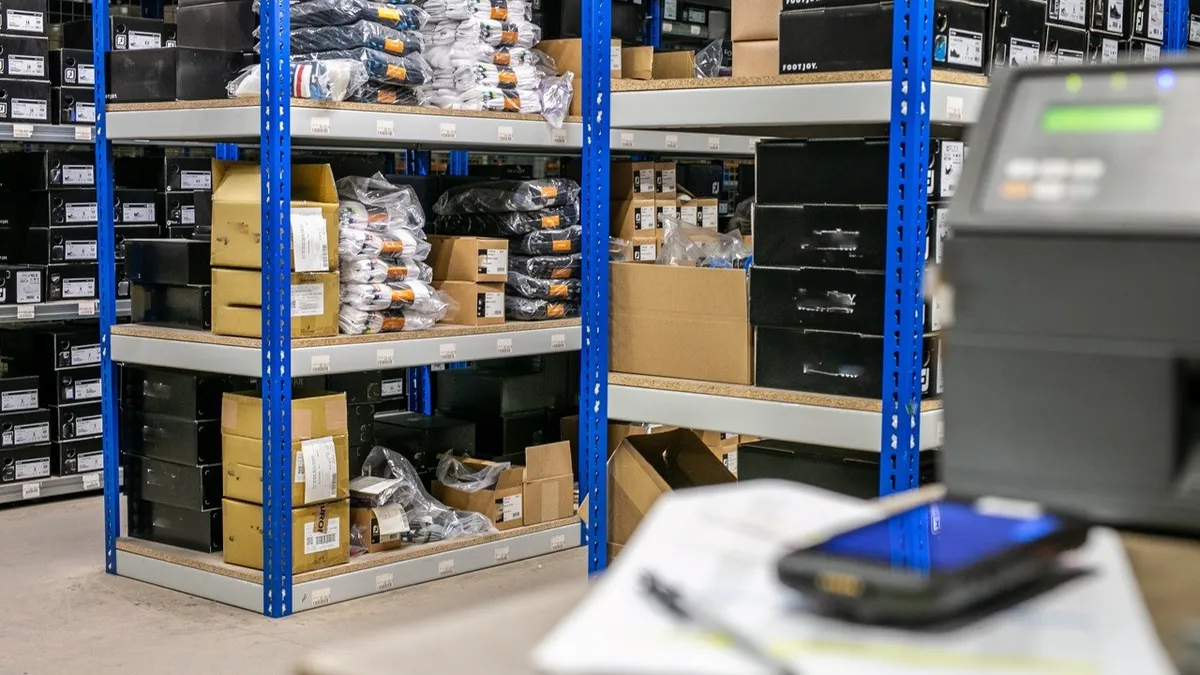
Most packaging is specified by people who never stand at a packing bench. A brand owner chooses a box because of how it looks when it arrives, a procurement team chooses it on unit price, and the consequences land somewhere else entirely.
A third-party logistics operation is the exception. You feel every packaging decision twice: once in labour at the bench, and again in the floor space it occupies while it waits. That makes 3PLs the most demanding packaging buyers in the market, and the easiest to have a sensible conversation with.
The cost is labour, not material
The unit price of a box is the number on the quote, and it is rarely the number that matters.
Do the arithmetic on your own volumes. Take the seconds a closure adds or removes per pack, multiply by packs per day, and convert to hours. Four seconds across two thousand packs is a little over two hours a day, which is eleven hours a week, which is most of a full-time shift. Against that, the difference in material cost per box is pennies.
This is why the packaging conversation with a 3PL should start at the bench and work backwards, rather than starting with a price list. It is also why a slightly dearer box is routinely the cheaper one.
Where the seconds actually go
Watch a pack cycle and the time is not where people assume. It goes on picking up and putting down a tape gun, squaring and taping a case base before anything can go in it, closing and taping the top, and the hesitation when an operator is deciding which of six similar sizes to reach for.
Two format decisions take most of that out:
A crash-lock base erects in one motion and locks itself. The separate operation of taping the bottom of a case disappears, along with the risk of it being done badly on the one parcel that gets dropped.
A peel and seal strip removes the tape gun entirely. Peel, fold, press. There is no roll to run out, no tool to put down, and no variation between the operator who has done it for six years and the one who started on Monday. Our comparison of peel and seal against tape goes through the throughput case in detail.
The tamper evidence comes free with that second one, which matters when a disputed delivery becomes a chargeback somebody has to absorb. There is more on that in tamper-evident closures.
The multi-client problem
A brand holds packaging for one product range. A 3PL holds it for twenty clients at once, and the instinct is to give each of them a range.
That multiplies very badly. Twenty clients at eight sizes each is a hundred and sixty lines of corrugated occupying pallet space that could hold revenue-generating stock, and it does not improve fit, because most of those sizes are duplicates of each other within a few millimetres.
The workable structure is a shared core ladder with deliberate steps between sizes, covering the bulk of SKUs across the whole client base, plus a small number of client-specific formats where the product or the volume genuinely earns one. Gaps in the ladder are a feature: they push a pack up to the next size, which is usually the right answer anyway, and they keep each line turning fast enough to buy well.
We made the same argument from the distributor’s side in stocking a wholesale range, and the logic transfers almost unchanged.
Dim weight decides the ladder
Whoever pays the courier bill cares about volume, not just weight, and a 3PL either pays it or is measured on it.
That makes right-sizing continuous money rather than a one-off saving. Every parcel that goes out a size too big pays the difference, every day, for as long as the specification stands. It is the one packaging decision that compounds.
Two things follow. First, the ladder should be built around carrier pricing bands rather than round numbers, which our guide to sizing to carrier bands covers. Second, the internal and external dimensions both need stating, because the band is set by the outside and the fit is set by the inside: see how to measure a box.
Floor space is part of the price

Packaging that is cheap per unit and awkward to store is not cheap.
Three things worth agreeing before the first delivery rather than after it: how the pallet is configured and how high it is built, whether it suits your racking and your mechanical handling, and how the bench gets replenished. A pack format that requires a forklift trip to restock a bench is paying for itself in interruptions.
It is a conversation worth having explicitly, because it is the one a packaging supplier will not raise unprompted and the one a fulfilment manager notices every day.
Peak, and the people who work it
Fulfilment labour is seasonal in a way that most manufacturing is not. The operation that runs with a stable team in June is running with agency staff in November.
That changes what a good closure is. It is not the one a trained operator can do fastest; it is the one that needs a single demonstration and cannot be done wrong. Peel, fold, press survives a shift handover. A taped seam done to a standard that somebody explained once does not.
The same applies to size selection. A ladder with clear steps and obvious labelling produces fewer wrong choices under pressure than a dense one where three options look identical on a shelf.
Branded, plain, or both
Client-branded packaging is a service a 3PL can charge for and a cost that needs understanding before it is quoted.
Print carries a one-off tooling cost per colour per design in the form of printing plates, retained and reused on repeat runs. The first order on a client’s artwork carries it; later ones do not. Across a client base that means branded packaging is economic for clients with volume and continuity, and poor value for the ones who might leave in six months.
A sensible default is a neutral, unbranded core range that works for everybody, with branded formats offered as an upgrade to clients whose volumes justify the plates. Two colours of flexographic print covers logos, type and handling marks, which is what most of that work actually needs. Where artwork is involved, it is worth knowing what a brand colour does on kraft board before promising a client a match.
Buying it: call-offs rather than orders
Fulfilment demand is client-driven, which means it is lumpy and only partly within your control. A client wins a retailer, another runs a promotion nobody mentioned, and a third leaves.
Reactive ordering against that produces short runs, expedited freight and the occasional stockout in the week it hurts most. A programme handles it better: a specification agreed and locked, a volume committed for a period, and call-offs drawn against it, with buffer stock built in deliberately where demand is spiky. Our piece on running a repeat programme covers what to lock and what drifts if nobody reviews it.
Where we fit
We are a trade-only manufacturer in Huntingdon. We supply packaging distributors, resellers and high-volume trade buyers, and we do not sell to end users, which for a 3PL means we are not going to turn up in front of your clients.
Formats run from 0201 cases and 0427 mailers through book wraps and letterbox formats to bespoke die-cut designs, printed or plain, with peel and seal applied inline rather than as a secondary process. Deliveries go to your site or direct to your client’s, palletised and labelled as you specify.
Send us your size ladder and your volumes and we will tell you where it can be consolidated, what it costs at pallet volume, and what the bench would save.