Service

Corrugated Conversion and Finishing

High-speed rotary die-cutting with inline print, glue, peel and seal and automatic palletisation. One pass from sheet to pallet.

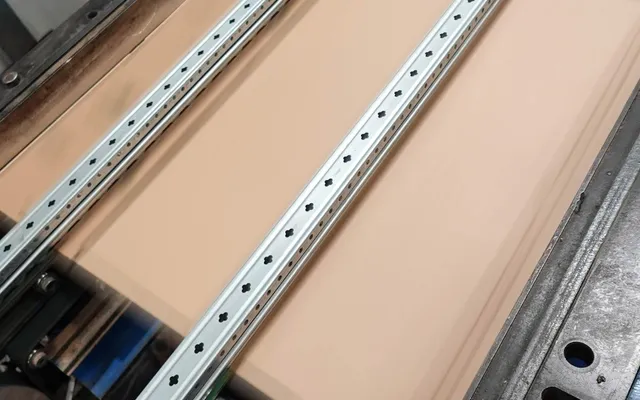
Corrugated sheets being converted on Tradepack's rotary die-cutting line

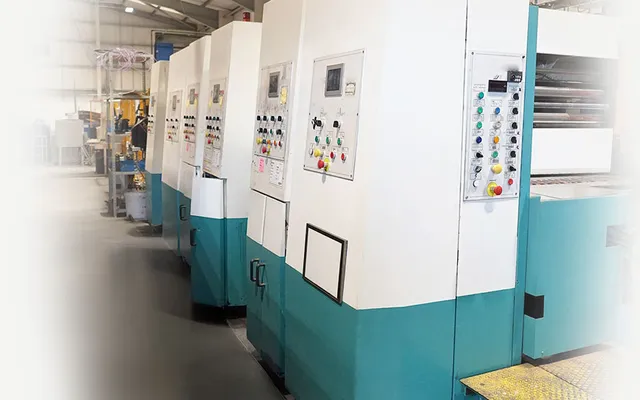
High-speed rotary die-cutting with inline print and glue

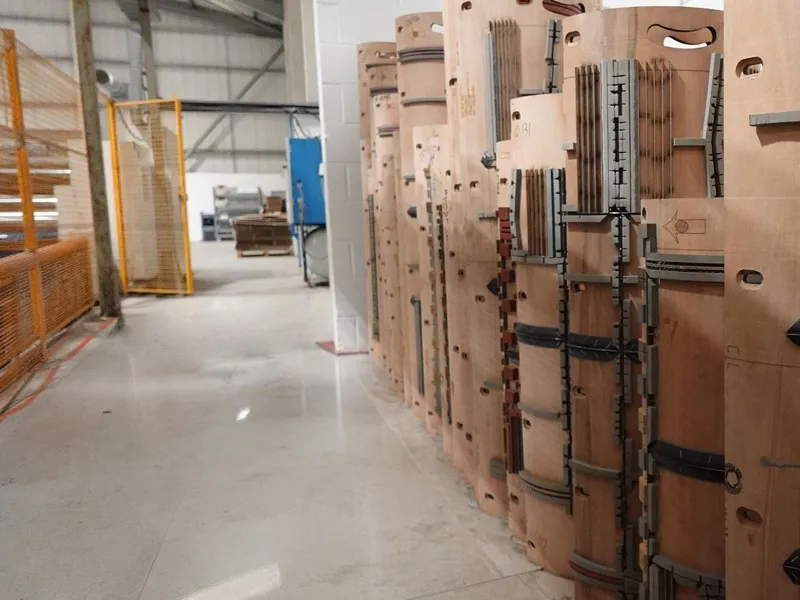
Our rotary die-cutting lines convert corrugated sheets into finished packaging in a continuous production flow. Printing, cutting, creasing, gluing and palletising all happen inline, reducing handling, setup time and unit cost. This single-pass process supports repeatable output and consistent pack performance across large production runs.

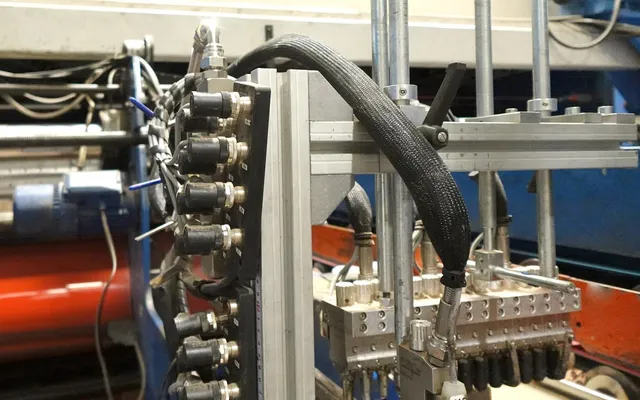
Dual hot-melt and cold glue application

Controlled glue patterns from our multi-point cold glue system and hot-melt applicator ensure strong bonds and consistent carton rigidity. Glue lines are applied precisely to avoid squeeze-out, so cartons perform consistently at the pack bench or through automated case erectors. Our hot-melt adhesives are certified 81% from renewable sources and carbon negative.

Peel and seal application

Pressure-sensitive adhesive strips are applied inline to create fast-closing postal formats. Peel and seal removes the need for tape, helping packing operations improve speed and consistency. It is the closure behind our book wraps and 0427 mailers.

Automatic palletisation

Finished packaging is counted, stacked and palletised at the end of the line, ready for despatch to your warehouse or direct to your customer.

Conversion is the process that turns flat corrugated sheet into finished packaging. Ours is built around a single continuous line, so that every operation the pack needs happens in one pass and the product leaves the line on a pallet.

What happens on the line

A corrugated sheet enters the feed, is printed in up to two colours, passes through the rotary die-cutting and slotting unit, is creased, receives its cold glue or hot-melt bond, has a peel and seal strip applied where the specification calls for one, and is folded, counted and palletised. There are no separate print or gluing operations and no work in progress between machines.

Why it matters to trade buyers

Every hand-off between machines adds cost, time and variability. Removing them does three things for the distributors and resellers we supply:

  • Lower unit cost, because handling and setup are a fraction of a multi-stage process.
  • Shorter, more predictable lead times, because there is one schedule, not four.
  • Consistency, because the same settings produce the same pack from the first sheet to the last.

Equipment

  • 2-colour flexographic printing press.
  • Rotary die-cutting and slotting unit.
  • Multi-point cold glue system.
  • Hot-melt peel and seal applicator.
  • Automatic palletiser.

FAQ

Conversion & finishing: questions

What is single-pass corrugated conversion?

Single-pass conversion means the sheet is printed, die-cut, creased, glued, fitted with peel and seal and palletised in one continuous run through the line, rather than moving between separate machines. It removes handling, reduces setup and keeps unit cost low at volume.

What run lengths are your lines suited to?

Our lines are set up for trade volumes: pallet quantities and repeat programmes. Short bespoke runs are better served by our digital flatbed, which we use for sampling and low-volume work before tooling.

Start your packaging project

Send us the format, dimensions, quantities and print you need and our team will come back with a drawing, a board recommendation and a trade price.